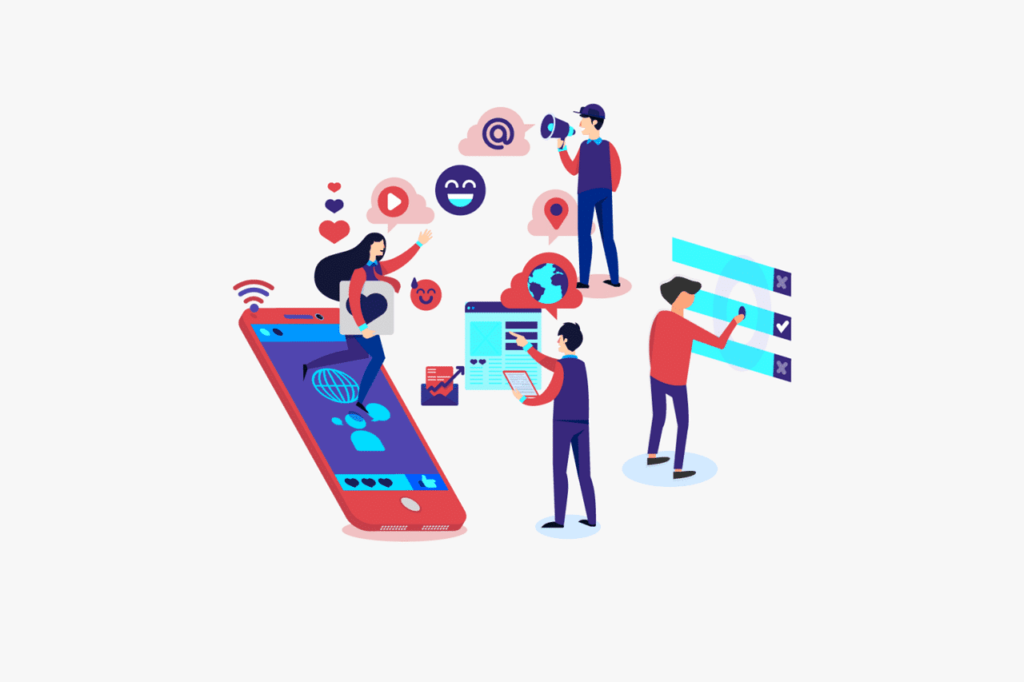

Consumers no longer interact with brands through a single touchpoint. Social media, websites, email, in-store experiences, and mobile applications now form part of the same customer journey.
This makes an omnichannel approach increasingly important for brands.
Omnichannel marketing aims to provide a consistent, seamless, and personalized experience regardless of which channel the customer uses. This integrated relationship strengthens both trust and loyalty.
In today’s marketing landscape, successful brands are no longer simply those that are “everywhere.” They are the ones capable of delivering the same brand experience everywhere.
The Era of Single-Channel Marketing Is Over
Today’s consumers interact with brands across multiple environments: social media, mobile applications, email inboxes, physical stores, websites, and even connected devices.
As a result, marketing has evolved from a single-channel model into a broader omnichannel structure.
Omnichannel marketing aims to provide customers with a consistent experience wherever they engage with the brand.
Whether a user discovers a campaign on Instagram, adds a product to their cart on the website, or completes the purchase in a physical store, they should encounter the same brand identity, tone of voice, and value proposition throughout the journey.
In the new marketing landscape, differentiation is no longer about simply being present everywhere. It is about being consistently present across every relevant touchpoint.
1. What Is Omnichannel Marketing?
Omnichannel marketing refers to creating one integrated customer experience across all online and offline brand touchpoints.
The Key Difference: Multichannel vs. Omnichannel
- Multichannel: The brand is present across multiple channels, but those channels operate independently.
- Omnichannel: The channels are connected, and the customer experience continues seamlessly as users move from one touchpoint to another.
Example:
A customer sees a product on Instagram → visits the website → adds it to the cart → later visits a physical store to try the product → the store system recognises the customer’s previous digital interactions → the customer receives a personalized email offer later that day.
This is a true omnichannel customer journey.
2. What Shapes the Modern Omnichannel Experience?
Omnichannel marketing is no longer simply a marketing strategy. It sits at the intersection of data, technology, and consumer behaviour.
Four major elements are particularly important in shaping today’s omnichannel experience.
1. Data Integration
Bringing customer data from multiple channels into a unified structure is one of the most critical steps.
CRM platforms, e-commerce systems, email marketing tools, analytics platforms, and advertising technologies need to work together.
Tools such as Google Analytics 4, Meta Advantage+, and HubSpot CRM can contribute to this integrated ecosystem.
When customer data is connected effectively, brands can gain a more complete understanding of the customer journey.
2. Hyper-Personalization
Personalization is increasingly moving beyond traditional demographic segmentation toward behaviour-based personalization.
Brands can analyse factors such as:
- Which device a customer uses
- What time they are most active
- Which content they interact with
- Which products they browse
- Which channels they prefer
The customer experience can then be adapted accordingly.
For example, if a customer frequently shops via mobile around 10:00 PM, email timing or promotional messaging may be optimized based on this behavioural pattern.
3. Artificial Intelligence and Automation
AI is increasingly involved across multiple stages of the customer journey:
- Chatbots provide immediate customer support
- Recommendation engines personalize shopping experiences
- Advertising algorithms analyse behavioural signals
- Automation platforms trigger messages based on customer actions
When used effectively, AI can make omnichannel experiences more responsive and scalable.
4. Consistency and Brand Voice
One of the biggest risks for a brand is appearing completely different from one channel to another.
Within an omnichannel strategy, consistency across messaging, visual identity, colour palette, tone of voice, and brand promises helps strengthen trust.
The platform may change, but the brand experience should remain recognisable.
3. How Can the Relationship Between the Brand and Its Target Audience Be Strengthened?
The main objective of an omnichannel strategy is not simply to “be everywhere.”
It is to build a meaningful relationship at every relevant touchpoint.
1. Map the Customer Journey
Identify the key stages and touchpoints within your audience journey:
- Awareness → Social media
- Consideration → Website
- Purchase → Mobile, e-commerce, or physical store
- Loyalty → Email, community, CRM, and campaigns
Each stage should be supported with data while also considering the emotional experience of the customer.
2. Define the Role of Each Channel
Not every channel needs to perform the same function.
For example:
- Instagram → Inspiration
- Website → Information
- Physical Store → Experience
- Email → Loyalty
Defining clear roles helps brands use each platform according to its strengths while keeping the overall customer journey connected.
3. Build Omnichannel Loyalty Programs
Customers should be able to earn and use the same rewards regardless of where they make a purchase.
Whether they buy online, through an app, or in a physical store, their loyalty experience should remain connected.
Brands such as Starbucks and Sephora are widely recognised for building customer loyalty programs that integrate digital and physical touchpoints.
4. Technology Infrastructure: The Invisible Backbone of Omnichannel
An omnichannel strategy can only be sustained with a strong and connected data infrastructure.
Recommended Technology Layers
- CRM: HubSpot, Salesforce, or Zoho CRM
- Analytics: Google Analytics 4 + BigQuery integration
- Advertising Management: Performance Max, Meta Advantage+, LinkedIn Ads
- Email Automation: Klaviyo, Mailchimp, Brevo
- Customer Service: Zendesk, Intercom
When these systems are integrated effectively, marketing automation and customer relationship management can be managed within a more connected ecosystem.
Technology alone does not create omnichannel success, but it provides the infrastructure needed to deliver a consistent customer experience at scale.
5. Measuring Omnichannel Success: Which Metrics Matter?
Key KPIs
- Customer Lifetime Value (CLV): The long-term revenue generated by a customer across all channels
- Cross-Channel Conversion Rate: The conversion performance of users who move between multiple touchpoints
- Attribution Modeling: Understanding how different channels contribute to conversions
- Engagement Rate: Measuring how customers interact with the brand across different touchpoints
Measurement Example
Imagine a customer discovers a product on Instagram, searches for the brand on Google the following day, and eventually purchases through the website.
A simple last-click attribution model may assign the entire conversion to Google.
However, this would overlook the role Instagram played in generating the initial awareness.
In such cases, a data-driven attribution model can provide a more comprehensive understanding of how different channels contribute to the customer journey.
6. The Key to Omnichannel Success: Human Experience
All of this data, technology, automation, and artificial intelligence ultimately serves one purpose:
Improving the human experience.
If customers do not feel understood or valued, the relationship with the brand can weaken regardless of how sophisticated the technology is.
For this reason:
- Think with the customer at the centre
- Connect channels while keeping communication simple
- Measure every stage without losing sight of the experience
Omnichannel marketing is one of the clearest expressions of a human-centred digital strategy.
The Art of Delivering One Experience Across Every Channel
Omnichannel marketing is not simply about appearing across multiple platforms.
It is about creating one consistent brand experience across all of them.
When customers move from one platform to another, their relationship with the brand should not restart. It should continue and become stronger.
True success comes from creating consistency not only across channels, but also in the customer’s mind.
Technology is the enabler.
Experience is the strategy.
Give Your Brand One Consistent Voice Across Every Channel
An effective omnichannel strategy requires more than technical integration. It also requires emotional and strategic consistency.
At Minds2Lead, we help brands transform fragmented digital touchpoints into connected ecosystems that communicate with one clear and consistent voice.
Instead of creating channel complexity, we build brand consistency and connected customer experiences.
Work with our omnichannel strategy team to develop a more integrated strategy for your brand.